
Blogs
What Does a Traditional South Indian Breakfast Look Like?
Forget cereal and toast for a minute. A traditional South Indian breakfast is hot, savory, freshly made and served with at least two things to dip into. It is the kind of breakfast that makes you sit down properly, even on a busy morning.
If you have only ever had Indian food for dinner, this is a whole different side of the cuisine. At Rohan’s Indian Bistro in Glassboro, our dosas bring a taste of that morning table to South Jersey. Here is what the full spread looks like and how to eat it.
What Makes a South Indian Breakfast Different?
Three things set it apart from most breakfasts around the world.
First, it is savory. Sugar barely features until the coffee arrives.
Second, it is built on rice and lentils instead of wheat. Most dishes start with a batter that has been soaked, ground and left to ferment overnight. That makes them light, slightly tangy and easy on the stomach.
Third, a lot of it is steamed or cooked on a hot griddle with very little oil. You feel full afterwards, but not heavy.
The four southern states, Tamil Nadu, Karnataka, Kerala and Andhra Pradesh along with Telangana, each have their own favorites, but a few dishes show up on almost every table.
The Dishes on a Traditional South Indian Breakfast Plate
Idli
Soft, round, steamed cakes made from fermented rice and lentil batter. Idli has almost no oil and a mild taste, which is why it is often the first solid food given to children and the first thing people eat when they are unwell. It is all about what you dip it into.
Dosa
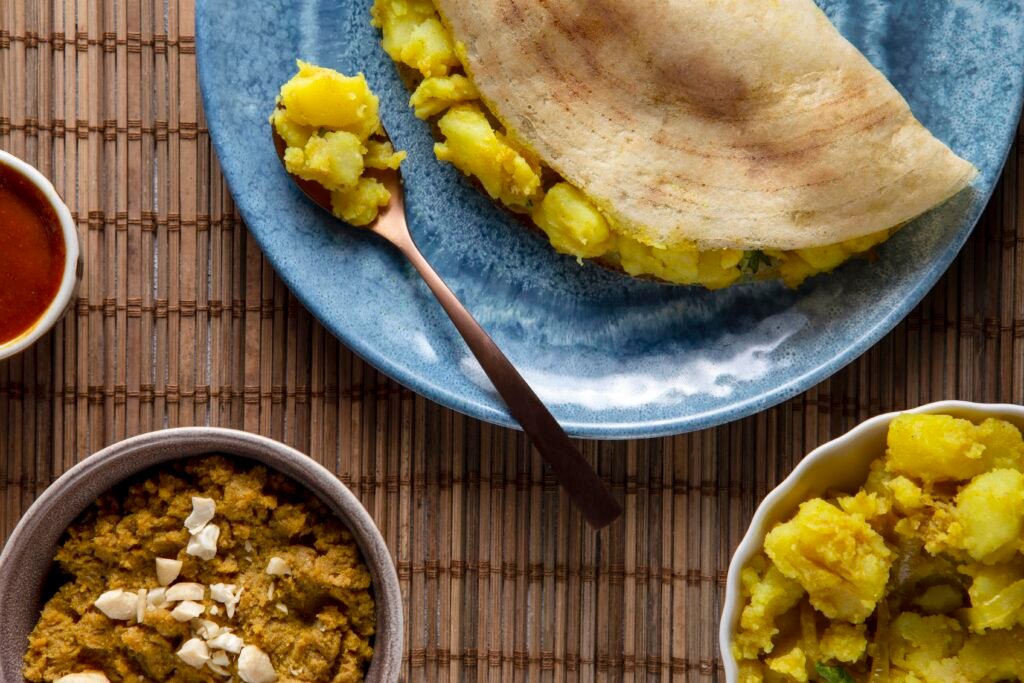
The star of the show. A dosa is a thin, crisp, golden crepe made from the same family of batter, spread on a hot griddle. A plain dosa is eaten with chutney and sambar. A masala dosa is folded around a filling of spiced potato and onion.
Medu Vada
A savory doughnut made from ground urad dal, crisp on the outside and fluffy inside, with black pepper, curry leaves and bits of green chili. It is usually served alongside idli and dunked in sambar.
Upma
A warm, soft dish of roasted semolina cooked with mustard seeds, curry leaves, onion and vegetables. It takes fifteen minutes to make and is the weekday breakfast in many homes.
Pongal
Rice and yellow moong dal cooked together until creamy, finished with ghee, black pepper, cumin and cashews. Think of it as a savory porridge, comforting and filling.
Uttapam
A thicker, softer cousin of the dosa, topped with onion, tomato, chili and cilantro while it cooks. Some people call it an Indian pancake.
The Sides That Make the Meal
No South Indian breakfast is complete without these.
Sambar is a tangy lentil and vegetable stew flavored with tamarind and a special spice blend. It is poured over idli, served in a bowl with dosa, and happily drunk on its own.
Coconut chutney is fresh grated coconut ground with green chili and a little roasted gram, topped with a sizzling tempering of mustard seeds and curry leaves. Cool, creamy and mild.
Tomato or red chutney brings heat and tang.
Podi, nicknamed gunpowder, is a dry powder of roasted lentils and red chili mixed with sesame oil or ghee. A little goes a long way.
Also Read: What Makes South Indian Food Different From North Indian Food?
Filter Coffee: The Perfect Finish
Breakfast ends with South Indian filter coffee. Strong coffee is slowly dripped through a metal filter, mixed with hot milk and sugar, then poured back and forth between a steel tumbler and a small bowl until it is frothy. It is rich, milky and nothing like a regular drip coffee.
How to Eat It Like a Local
Use your right hand. Tear off a piece of dosa or idli, dip it in chutney, then into sambar, and eat. That is it. There is no wrong order and no cutlery needed, although nobody will mind if you ask for a fork.
A common plate is two idlis, one vada and one dosa, with sambar and two chutneys in the middle. It looks like a lot. It disappears quickly.
Is a South Indian Breakfast Healthy?
Mostly, yes. Fermented batter is gentle on digestion. The rice and lentil combination gives you carbs and protein together. Idli is steamed, dosa uses very little oil, and sambar adds vegetables and more lentils.
Most classic dishes are also naturally gluten-free and many are vegan. The fried vada and ghee-heavy versions are the exceptions, so enjoy those in moderation. You can see what suits you on our gluten-free menu and vegan menu.
How Is It Different From North Indian Breakfast?
North Indian mornings lean on wheat: stuffed parathas with butter and yogurt, or poori with potato curry. South Indian mornings lean on rice, lentils, coconut and tamarind. Both are delicious, just very different. Our post on South Indian food vs North Indian food compares them in detail.
South Indian Favorites at Rohan’s Indian Bistro
You do not need to fly to Chennai for a good dosa. At Rohan’s Indian Bistro, our South Indian menu includes Plain Dosa, Masala Dosa, Onion Dosa, Butter Dosa, Paneer Dosa and a few fun twists like Butter Chicken Dosa, all served with sambar and chutneys.
We open at 11 AM, so think of it as a South Indian brunch or lunch. Add a drink from our beverages and you are set.
New to these dishes? Our guide to dosa and idli explains each one, and the food gallery shows you what to expect. When you are ready, order online or come see us at our Indian restaurant in Glassboro.