



Menu
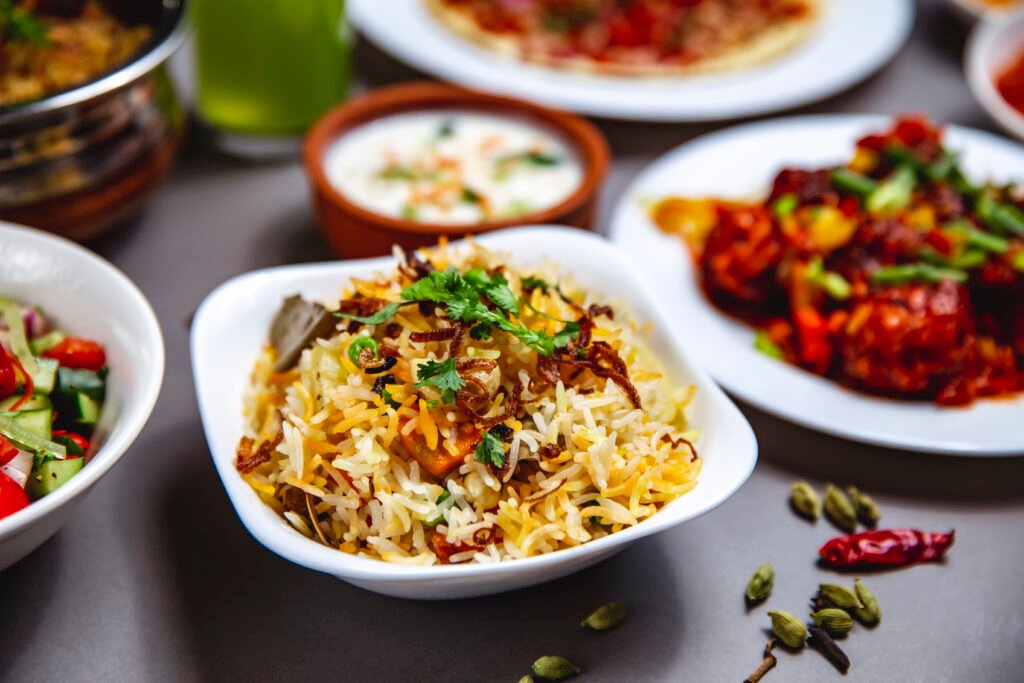
How Is Biryani Different From Fried Rice?
The short answer to the biryani vs fried rice question is this: biryani is a slow-layered, spice-marinated rice dish cooked with meat or vegetables from the very start, while fried rice is pre-cooked rice stir-fried quickly with sauces and seasonings at the end. They might look similar sitting side by side on a plate, but the cooking process, the spice profile, and even the cultural origin are completely different — and once you understand how, you’ll never mix the two up again.
Where Each Dish Actually Comes From
Fried rice has Chinese origins, built around using up leftover cooked rice by quickly stir-frying it in a hot wok with soy sauce, egg, and vegetables. Biryani comes from the Indian subcontinent, with roots in Mughal royal kitchens, where rice and meat were slow-cooked together in layers so the flavors could fully develop over time. One dish was born out of practicality and speed; the other was built for depth and ceremony.
The Cooking Method Makes All the Difference
This is really the core of the biryani vs fried rice comparison. Fried rice is cooked in one fast step — rice goes into a hot pan or wok, gets tossed with sauce, egg, and vegetables, and comes out in minutes. Biryani takes hours. The meat is marinated first, often overnight, in yogurt and spices. The rice is parboiled separately. Then everything is layered in a heavy pot and sealed to cook on low heat — a technique called “dum” — so the rice slowly absorbs the aroma of the meat, spices, and even fried onions and saffron placed on top. That sealed, slow-cook process is something fried rice never goes through, and it’s the reason biryani tastes so much deeper.
Completely Different Spice Profiles
Fried rice leans on soy sauce, sesame oil, garlic, and sometimes a bit of white pepper — savory and salty, but relatively simple. Biryani uses a full spice blend: cardamom, cloves, cinnamon, bay leaf, star anise, garam masala, and often saffron-soaked milk for color and aroma. At Rohan’s Indian Bistro, that layered spicing is exactly what gives the biryani its signature aroma the moment the pot is opened — something no amount of soy sauce can replicate.
Texture Tells You Everything
Pick up a spoonful of each and the texture alone answers the biryani vs fried rice question. Fried rice grains are usually a bit dry, separate, and slightly chewy from the high-heat stir-fry. Biryani rice is fluffier and more fragrant, with each grain staying separate but tender, having gently absorbed the meat juices and spice oils during the slow dum cooking — never mushy, but never dry either.
What Goes Into the Pot
Fried rice typically includes egg, scallions, peas, carrots, and a protein like chicken or shrimp, added quickly toward the end. Biryani is built around marinated chicken, lamb, or goat — or vegetables for a veg version — cooked low and slow with the rice rather than tossed in afterward. That’s why a proper chicken or goat biryani tastes like the meat and rice were cooked as one dish, not combined at the last minute. If you’d rather skip the meat entirely, the vegetarian menu still uses the same dum method with vegetables layered in instead.
Serving Style and Occasion
Fried rice is often a side dish or a quick standalone meal — casual, fast, everyday food. Biryani is frequently the centerpiece of a meal, served at weddings, celebrations, and family gatherings across South Asia, usually with raita and a side salad from the side order menu. That cultural weight is part of why biryani feels more like an event than a quick bite.
Which One Should You Order?
If you want something light, fast, and savory, fried rice does the job. If you want a rich, aromatic dish where every bite carries layers of spice and slow-cooked flavor, biryani is the clear choice. Rohan’s biryani menu includes both vegetarian and non-vegetarian options, made the traditional dum way rather than shortcut-fried, so you’re getting the real version of the dish, not a rice-and-spice imitation. Pair it with something cool from the beverages menu and you’ve got a full meal rather than just a side.
Why the Comparison Even Comes Up
Biryani and fried rice both get grouped under “rice dishes” on a lot of takeout menus, which is really the only reason people compare them at all. Once you break down the cooking method, spice blend, and cultural context, it’s clear they’re not competing versions of the same idea — they’re two entirely different culinary traditions that just happen to both start with rice. If you’re curious how biryani’s spice-forward approach compares to other Indian regional styles, it’s worth reading through South Indian food vs North Indian food, since biryani itself has variations that lean toward both traditions depending on the region it comes from.
Storing and Reheating Leftovers of Each
How each dish holds up the next day is another small but telling difference. Fried rice reheats reasonably well in a hot pan or wok, since a quick blast of high heat is exactly the cooking method it started with — a microwave works too, though the texture softens a bit. Biryani is more particular. Reheating it in a microwave can dry it out or make it clump, since the rice has already absorbed most of the moisture it’s going to during the original dum cooking. The better approach is a low, covered heat on the stovetop with a splash of water or a dab of ghee, which helps the rice loosen back up without turning mushy. It’s a small detail, but it says something about how differently these two dishes are built — one designed for a quick reheat, the other still rewarding a bit of patience even the second time around.
Regional Biryani Styles Worth Knowing
“Biryani” isn’t one single recipe — it’s a family of dishes that changes shape depending on which part of the Indian subcontinent it comes from. Hyderabadi biryani is known for its layering technique and use of fried onions and saffron, often made with marinated raw meat cooked directly with the rice (called “kacchi” style). Lucknowi or Awadhi biryani tends to be milder and more aromatic, with meat cooked separately before layering (“pakki” style), reflecting the refined Mughal court cooking it descended from. Kolkata biryani adds a distinctive touch with potato, a nod to how the dish evolved once it reached Bengal. None of these regional differences show up in fried rice, which has stayed a far more standardized dish regardless of where it’s made — another reminder that biryani carries centuries of regional history in a way a quick stir-fry never had to.
Common Mistakes That Ruin Both Dishes
A surprising number of biryani and fried rice failures come down to the same root cause: using the wrong rice, or rice at the wrong moisture level. Fried rice made with freshly cooked, still-warm rice turns mushy and clumps together in the wok, which is exactly why restaurants use day-old, cold rice for the job — the grains have dried out just enough to fry properly instead of steaming in their own moisture. Biryani has the opposite failure point. If the rice is parboiled too far before it goes into the pot, it turns to mush during the dum cooking; if it’s undercooked, the final dish comes out with a raw, chalky center. Getting biryani right means pulling the rice at roughly 70 to 80 percent doneness before layering it with the meat, so it finishes cooking gently inside the sealed pot rather than boiling further. It’s a small technical window, and it’s the difference between a biryani that falls apart when you serve it and one that holds its shape, grain by grain.
How Rohan’s Approaches It
At Rohan’s Indian Bistro, biryani is never rushed. The meat goes through its full marination window, the rice is parboiled to the right stage before it ever touches the pot, and the whole thing is sealed and finished on dum rather than stirred together at the end like a fried rice order would be. It’s a longer process, and it’s exactly why the biryani here tastes closer to what you’d get at a family celebration than what you’d order from a quick takeout counter. You can see the full lineup of options, from chicken and goat to vegetable biryani, on the biryani page, or place an order directly through online ordering.