



Menu
What Does Tandoori Mean in Indian Cuisine?
You have seen the word on menus a hundred times, usually next to something that arrives sizzling and slightly charred: tandoori chicken, tandoori prawns, tandoori paneer. But what does tandoori mean, exactly? It is one of those terms people use happily without being sure of the definition. The short version is that it describes a way of cooking rather than a single dish, and it is behind some of the most loved food in Indian cuisine. Once you understand where the name comes from, the whole tandoori section of a menu suddenly makes a lot more sense.
The Short Answer
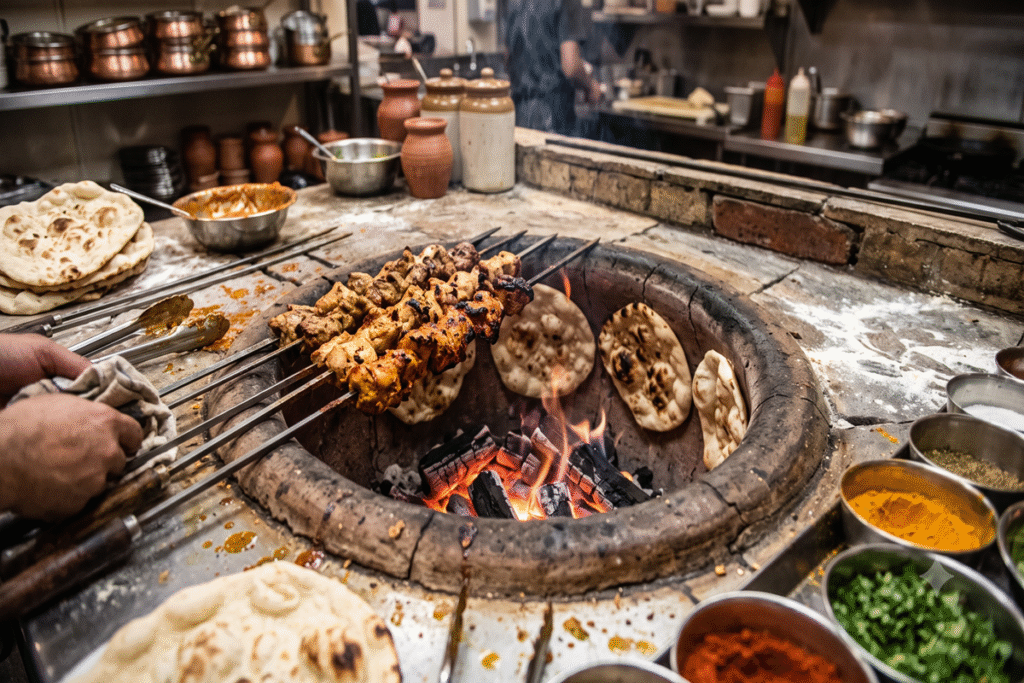
So, in plain terms: tandoori refers to food cooked in a tandoor, a traditional clay oven that reaches ferocious temperatures. Anything roasted or baked in that oven can be called tandoori, from marinated chicken to skewered vegetables to the naan bread stuck to its walls. The word is really a description of the method and the equipment, not a recipe. That is why so many different dishes share the name; what they have in common is not their ingredients but the searingly hot clay oven they were cooked in. Understanding that one fact unlocks the rest. From that single idea, everything else on the tandoori menu falls into place, because you stop seeing a list of unrelated dishes and start seeing one cooking method applied to many different ingredients. It is the kind of small thing that quietly makes you a more confident orderer.
The Tandoor: A Very Hot Clay Oven
At the heart of it all is the tandoor itself, and it is a remarkable piece of equipment:
- It is a large, cylindrical oven made of clay, often set into the ground or a counter.
- Charcoal or wood burns at the bottom, pushing temperatures very high.
- Meat and vegetables cook on long skewers lowered inside.
- Breads are slapped onto the hot inner walls to bake in seconds.
Those intense temperatures are the secret. They sear the outside fast, lock in moisture, and give tandoori food its signature char and smoke that a normal oven simply cannot copy.
What Gives Tandoori Its Flavour
People who ask what does tandoori mean usually really want to know why it tastes the way it does, and the answer is a combination of three things. First, the marinade, typically yoghurt and spices, which both flavours the food and tenderises it. Second, the extreme heat of the tandoor, which chars the surface and creates that smoky, slightly blackened edge. Third, the smoke itself from the charcoal, which perfumes everything cooked inside. Together they produce a taste that is tangy, smoky, spiced, and deeply savoury all at once. Miss any one of those elements and it is grilled food, but it is not quite tandoori.
The All-Important Marinade
The marinade is where tandoori gets much of its character, and it follows a fairly consistent logic:
- Yoghurt forms the base, tenderising the meat and helping spices stick.
- Ginger and garlic paste bring warmth and depth.
- Spices like red chilli, turmeric, cumin, and garam masala add colour and heat.
- Lemon juice and dried fenugreek round out the tang and aroma.
The food sits in this mixture for hours so the flavour soaks right in. The reddish colour many people associate with tandoori comes from the chilli and spices, sometimes helped along by a little colouring.
Popular Tandoori Dishes
Once you know what the word means, the menu reads differently. Tandoori chicken, marinated and roasted on the bone, is the famous one. Chicken tikka is the boneless, bite-sized cousin, often served as a starter or folded into a rich masala sauce. Seekh kebabs are spiced minced meat pressed onto skewers, while paneer tikka gives vegetarians the same smoky treatment. Even much of the bread, naan and tandoori roti, comes from the same oven. At Rohan’s Indian Bistro, the tandoori dishes carry that unmistakable char that tells you the oven was doing its job properly.
Tandoori Versus Other Styles
It helps to see where tandoori sits next to the other things on an Indian menu:
- Tandoori is dry-roasted in intense heat, not simmered in sauce.
- Curries are cooked in a gravy, slow and saucy, a different experience entirely.
- Fried starters like pakora are crisp and oily; tandoori is grilled and lean.
- A tikka can start life tandoori, then be added to a curry, as in tikka masala.
That last point trips people up. Chicken tikka masala, for instance, begins with tandoori-style chicken that is then finished in a creamy sauce, which is why it tastes both smoky and rich.
Also Read: How Rohan’s Indian Bistro Makes the Best Biryani in Glassboro, NJ
Healthier Than It Looks
There is a nice bonus hidden in what does tandoori mean: it is often one of the lighter ways to eat Indian food. Because the food is grilled on skewers rather than fried or drowned in a rich gravy, it uses far less oil than many curries. The yoghurt marinade adds protein and flavour without much fat, and the high heat cooks quickly without needing added grease. If you are watching what you eat but still want big flavour, the tandoori section is a smart place to look. It is one reason kitchens like Rohan’s Indian Bistro see tandoori starters ordered so often by people who want something satisfying but not heavy.
How To Order Tandoori Well
A little know-how helps you order from the tandoor with confidence:
- Ask whether a tikka is served dry as a starter or in a sauce as a main.
- Check the spice level, since tandoori marinades range from mild to fiery.
- Order a mixed tandoori platter to try several things at once.
- Pair it with naan, a fresh salad, and a mint chutney to balance the char.
Ordered this way, tandoori is one of the most reliably delicious parts of any Indian meal, and a place like Rohan’s Indian Bistro will tell you which dishes come dry and which arrive in sauce.
Where The Tandoor Comes From
The tandoor is not a modern invention; versions of the clay oven have been used across South and Central Asia for thousands of years. Archaeologists have found ovens of a similar shape at ancient sites, which tells you how old and how successful the design is. Over centuries it spread and evolved, becoming central to the food of Punjab in particular, where much of what the world now knows as tandoori cooking took shape. That long history is part of why these dishes feel so rooted; you are eating something cooked much the same way it has been for generations. The equipment is simple, but the results have kept people coming back for a very long time.
Can You Make Tandoori At Home?
People often wonder whether they can get that tandoori taste without a clay oven, and the honest answer is that you can get close, though not identical. A very hot conventional oven, a grill, or a barbecue can all char marinated meat and vegetables reasonably well, and the yoghurt-and-spice marinade does most of the flavour work regardless. What is hard to reproduce at home is the intense heat and the charcoal smoke of a real tandoor, which give restaurant versions their depth. A cast-iron pan or a smoking trick can help, but for the full effect there is no real substitute for the oven itself. That is part of why tandoori dishes are such a treat to order out.
Also Read: What to Order at Rohan’s Indian Bistro — A First-Timer’s Guide to Indian Food in Glassboro
Common Tandoori Dishes On A Menu
If you are scanning a menu, it helps to know the usual suspects. Alongside the famous roasted chicken you will often find tikka, boneless pieces of chicken, paneer, or fish; seekh kebabs of spiced minced meat; malai or reshmi kebabs, which are creamier and milder; and grilled prawns or fish for something lighter. Vegetarians are well served with paneer tikka and grilled vegetable skewers. Most of these arrive dry, often on a sizzling platter with onions and lemon, and make excellent starters or a light main. Knowing the names takes the guesswork out of that part of the menu entirely.
Conclusion
So, what does tandoori mean? It means cooked in a tandoor, the blazing clay oven that gives this food its smoky char, tender bite, and unmistakable flavour. It is a method, not a single dish, which is why it covers everything from chicken and kebabs to paneer and naan. Next time you see it on a menu, you will know exactly what you are ordering and why it tastes so good. And if you want to taste the method at its best, that is worth doing in person.
Curious how a proper tandoor tastes? Try the tandoori menu at Rohan’s Indian Bistro, details at rohansindianbistro.com.