

Menu
What To Order At An Indian Restaurant For The First Time
Walking into an Indian restaurant for the first time can feel a little overwhelming. The menu is long, half the names are unfamiliar, and you are not sure how spicy anything will be. The good news is that Indian food is welcoming once you know a few landmarks, and you really do not need to understand every dish to order a great meal. This is a straightforward guide to what to order at an indian restaurant when it is all new, from safe starters to crowd-pleasing mains, so your first experience is a delicious one rather than a nervous guess.
Don’t Panic At The Menu
That long menu looks intimidating, but it follows a pattern once you spot it. Dishes are usually grouped into starters, then curries and mains, then breads and rice, then sides and desserts. Most curries are built on a similar base and then vary by spice and richness, so you are really choosing along two simple lines: how spicy and how creamy. You do not have to know every dish; you just have to find the few that suit your taste. Ask the staff freely, too. They would far rather guide a first-timer than watch them order something they will not enjoy. A quick question like which dishes are mild, or what the kitchen is known for, will usually get you a genuinely helpful answer. Treat the staff as your guide rather than trying to decode everything alone, and the whole meal gets easier from the very first choice.
Start With Familiar Starters
Starters are a low-risk, high-reward way to begin, and several are easy to love straight away:
- Samosa: a crisp pastry filled with spiced potato and peas.
- Chicken tikka: tender grilled chunks of marinated chicken, not too spicy.
- Onion bhaji or pakora: crunchy, savoury fritters.
- Papadum with chutneys: thin, crisp wafers to nibble while you decide.
Sharing a couple of these gives you a gentle taste of the flavours to come. They are also a good way to see how the kitchen handles spice before you commit to a main.
Choosing Your First Curry
The curry is usually the centre of the meal, and it is the choice people fret about most when working out what to order at an indian restaurant. The trick is to start mild and creamy. Butter chicken, with its rich tomato-and-cream sauce, is famously easy to love. Chicken tikka masala is similar and just as popular. If you prefer something milder still, a korma is gentle and lightly sweet. Vegetarians can reach for palak paneer or a dal. Save the fiery dishes like vindaloo for once you know your tolerance. There is no shame in starting gentle; that is how most people fall for Indian food.
Breads And Rice: The Essentials
You will want something to eat your curry with, and this part is easy:
- Naan: soft, pillowy flatbread, perfect for scooping up sauce.
- Garlic naan: the same, with a fragrant garlic hit, a favourite for a reason.
- Plain or jeera rice: fluffy basmati that soaks up gravy nicely.
- Biryani: fragrant spiced rice that can be a whole meal on its own.
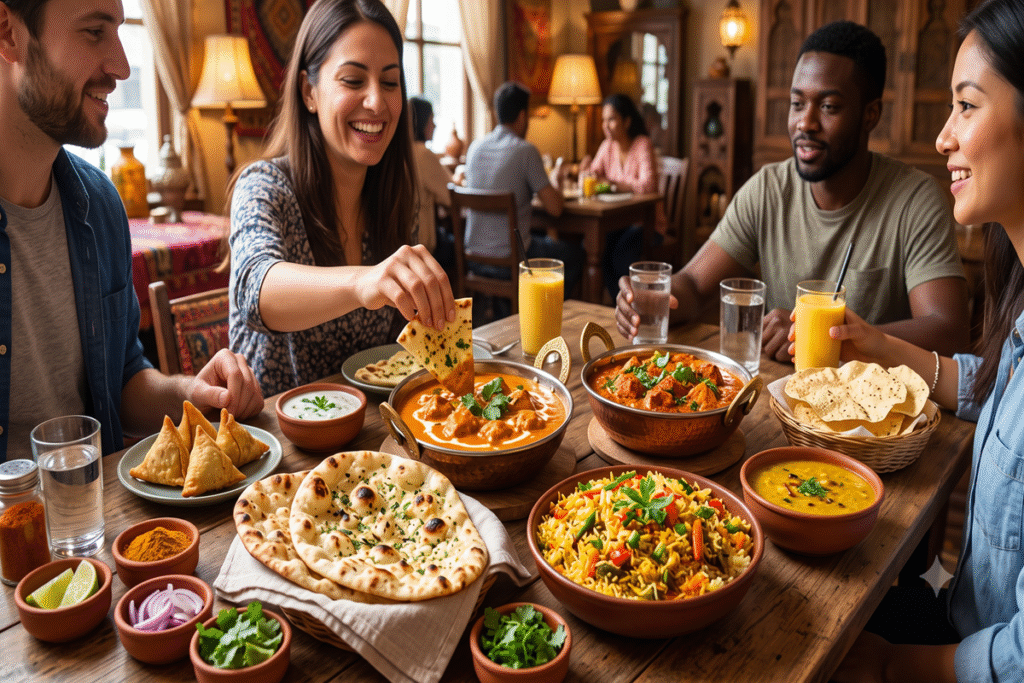
A simple move is to order one bread and one rice for the table and share. That way you can mop up the rich dishes with naan and pair the drier ones with rice.
Understand The Spice Levels
Spice is the thing first-timers worry about most, and it is easier to manage than you think. Most restaurants cook to mild, medium, and hot, and many will happily adjust a dish to your liking if you ask. Mild does not mean bland; it means the spices are aromatic rather than fiery. If you are unsure, order mild or medium and keep a cooling side like raita or a mango lassi on hand. You can always build up your heat on future visits. Somewhere like Rohan’s Indian Bistro will tell you honestly how hot a dish runs, so you are never caught out by an unexpected kick.
A Safe, Delicious First Order
If you want a no-risk template for what to order at an indian restaurant, this combination rarely misses:
- A shared starter of samosas or chicken tikka.
- Butter chicken or tikka masala as a mild, creamy main.
- Palak paneer or a dal for a vegetarian option to share.
- Garlic naan and jeera rice, plus a raita to cool things down.
This is the order the staff at Rohan’s Indian Bistro often suggest to newcomers, because it covers rich, mild, and fresh flavours without a single scary surprise. From here you can branch out with confidence next time.
Also Read: 5 Reasons Rohan’s Indian Bistro Is the Best Indian Restaurant in South Jersey
Don’t Forget The Drinks And Sides
A few extras round out the meal and make it more comfortable. A mango lassi, a sweet yoghurt drink, is the classic partner to a spicy meal and a lifesaver if a dish runs hotter than expected. A raita, cool yoghurt with cucumber, does the same job on the plate. Pickles and chutneys add little bursts of flavour to nibble alongside. And if you fancy something warm, a masala chai is a lovely way to finish. None of these are essential, but together they turn a good first meal into a properly rounded one, and they take the edge off any unexpected heat.
Ordering For A Group
Indian food is made for sharing, which makes a group the ideal way to try it:
- Order family-style, several dishes in the middle for everyone to share.
- Mix a couple of meat curries with a vegetarian dish and a dal.
- Get a variety of breads and one or two rice dishes for the table.
- Include a mild dish and a bolder one so every palate is covered.
Sharing like this lets everyone taste far more than a single plate each. It is exactly how Rohan’s Indian Bistro expects a table to eat, and it is the most fun way to discover what you love.
A Quick Glossary Of Menu Words
A handful of words show up again and again, and knowing them makes the whole menu easier to read. Masala simply means a spice blend, so anything labelled masala is cooked in a seasoned sauce. Tikka means boneless pieces, usually grilled. Saag or palak means the dish is spinach-based. Makhani means buttery and rich. Bhuna suggests a thicker, drier sauce, while korma means mild and creamy. Dal is lentils, paneer is fresh cheese, and gobi is cauliflower. You do not need to memorise a dictionary, but recognising even these few words lets you guess what a dish will be like before you ask. It turns an intimidating menu into something you can actually navigate.
Save Room For Dessert
It is easy to over-order on the savoury side and forget that Indian desserts are worth the space. Gulab jamun, soft milk-solid dumplings soaked in sweet syrup, is the classic and a safe first choice. Kheer is a comforting rice pudding, gently spiced. Kulfi is a dense, rich Indian ice cream, perfect after a spicy meal. These sweets are usually rich, so one or two shared around the table is plenty. Ending on something sweet also cools the palate nicely after a meal with any heat in it. If you are full, even a single dessert to share is a lovely way to round things off.
Also Read: Trade Pastry Wrap To Coat Fish, Poultry, Meat And Entrees
A Few Simple Table Customs
Nothing about eating Indian food is complicated, but a couple of small customs make the experience smoother. It is completely normal, and expected, to eat with your hands using bread to scoop, especially with drier dishes, so do not feel you must stick to cutlery. Sharing from communal dishes is the norm, so serve a little onto your own plate rather than eating straight from the middle. Bread and rice are there to carry the curry, not just to sit on the side. And if a dish is too hot, reach for yoghurt, rice, or a lassi rather than water. None of this is strict, but it helps a first visit feel natural.
Conclusion
Knowing what to order at an indian restaurant for the first time really comes down to a few gentle choices: an easy starter, a mild and creamy curry, a good bread and rice, and something cool on the side. Start there, ask the staff when in doubt, and let your taste grow from visit to visit. Indian food rewards the curious, and your first meal is just the beginning. Order simply, share generously, and you can hardly go wrong.
Ready for your first taste? Book a table at Rohan’s Indian Bistro or see the full menu at rohansindianbistro.com.