



Menu
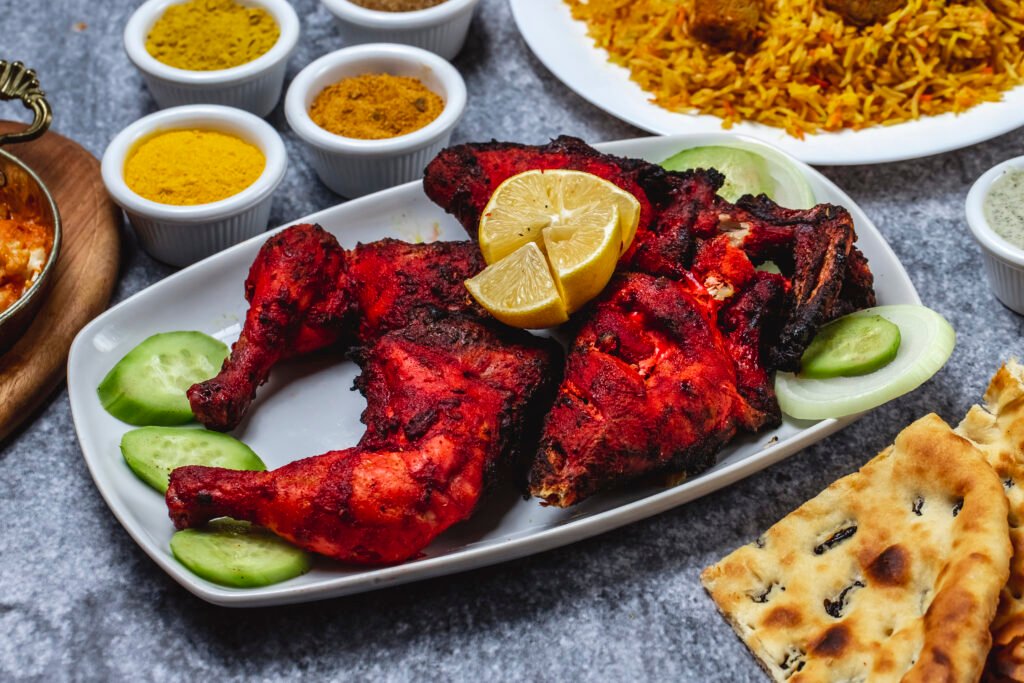
How Do Restaurants Get Tandoori Chicken So Tender?
Restaurants get tandoori chicken tender through a specific combination: a yogurt-and-spice marinade that breaks down the meat over several hours, high-heat cooking in a clay tandoor that seals in moisture fast, and bone-in cuts that hold onto juiciness better than boneless pieces. Skip any one of those steps, and you end up with the dry, rubbery tandoori chicken so many home cooks and lesser restaurants struggle to avoid.
It Starts With the Marinade, Not the Cooking
The single biggest factor in tender tandoori chicken happens long before the meat ever touches heat. A proper tandoori marinade is built around yogurt, which contains lactic acid and enzymes that gently break down muscle fibers over time — similar to how a dry rub tenderizes meat, but gentler and more even. Ginger-garlic paste adds its own natural enzymes that help with tenderizing too. This marinade needs real time to work — ideally several hours, often overnight — which is exactly why rushed versions of tandoori chicken tend to come out tougher.
The Right Spice Blend Does More Than Add Flavor
Beyond flavor, the spice blend in a tandoori marinade plays a functional role. Red chili powder, turmeric, garam masala, cumin, and coriander don’t just season the chicken — they coat it, which helps hold in moisture during the intense heat of cooking. At Rohan’s Indian Bistro, the marinade also includes a fresh ginger and garlic infusion specifically to balance richness while keeping the meat’s natural moisture intact, rather than drying it out with the spice mix.
The Tandoor Itself Is the Real Secret
A traditional clay tandoor cooks completely differently than a regular oven or grill. It reaches extremely high temperatures — often 700°F or more — and cooks food quickly from all directions at once, since the heat radiates from the clay walls as well as rising from the charcoal or wood fire at the base. That intense, fast heat sears the outside of the chicken almost instantly, locking in juices before they have a chance to escape. A regular oven, by comparison, cooks more slowly and evenly, giving moisture more time to cook out of the meat — which is exactly why home versions of tandoori chicken often come out drier than the restaurant version.
Bone-In Cuts Matter More Than People Realize
Restaurants that consistently nail tender tandoori chicken are almost always using bone-in, skin-on cuts, not boneless breast. Bone conducts heat differently than muscle, helping the meat around it cook more gently and evenly, while also holding in moisture that would otherwise escape faster from boneless cuts. It’s a small detail, but it makes a noticeable difference between a joint that stays juicy and a piece that dries out under the same heat.
The Charcoal Smoke Adds More Than Just Flavor
Traditional tandoor cooking often finishes with a light charcoal smoking touch — sometimes literally placing a small piece of hot charcoal with a drop of oil inside the dish and covering it briefly to trap the smoke. Beyond the earthy, smoky aroma this creates, the technique adds another layer of flavor without additional cooking time, meaning the chicken doesn’t need extra time under heat that could dry it out further.
A Squeeze of Lemon at the End
The final touch in a proper tandoori chicken preparation is often a light squeeze of fresh lemon juice right before serving. This isn’t just for taste — the acidity cuts through the richness of the spice marinade and gives the dish a fresh, bright finish that balances the smoky, deep flavors built up through the marinade and cooking process. It’s also part of why tandoori chicken pairs so well with something cool from the beverages menu or a side of fresh bread.
Why This Is Hard to Replicate at Home
Most home kitchens don’t have a real clay tandoor, which is the single hardest part of this process to recreate. A conventional oven or stovetop grill can get close with a long enough marinade and high heat, but it will rarely match the speed and intensity of an actual tandoor. That’s really the main reason restaurant tandoori chicken consistently tastes better than most homemade versions — it’s not a secret ingredient, it’s the equipment and the heat.
Why Color Doesn’t Always Mean Quality
A lot of people judge tandoori chicken by how red it looks, assuming a deeper red means a stronger marinade or better spicing. In reality, that bright red-orange color traditionally comes from Kashmiri red chili powder, which is prized for color more than raw heat, sometimes combined with a touch of natural food coloring in commercial kitchens. A pale or more muted orange piece of tandoori chicken isn’t necessarily under-marinated — it might just be made with a more natural spice ratio and less added color. The better indicators of quality are the ones you can actually taste and see up close: char marks from real tandoor heat, moisture when you cut into it, and a smoky aroma that a food coloring additive can never fake.
Chicken Tikka vs Tandoori Chicken — Same Technique, Different Cut
People often use “chicken tikka” and “tandoori chicken” interchangeably, but the technique that makes both tender is really the same one applied to different cuts. Tandoori chicken traditionally uses larger, bone-in pieces — leg quarters or a half chicken — marinated and cooked whole or in large sections. Chicken tikka uses smaller, boneless chunks, usually threaded onto skewers, which cook faster in the tandoor’s intense heat. Because the pieces are smaller, chicken tikka actually has less room for error on timing — a minute or two too long and boneless chunks dry out fast, which is exactly why the marinade matters even more for tikka than for a larger tandoori piece. Both dishes rely on the same yogurt-based marinade and the same high, radiant tandoor heat; the difference is really just about cut size and how forgiving that size is under intense, fast cooking.
Mistakes That Ruin Tandoori Chicken at Home
Even with a good marinade, a few common mistakes trip up home cooks trying to recreate this dish. Marinating for only 20 or 30 minutes is the biggest one — that’s simply not enough time for the yogurt and enzymes to do their job, no matter how strong the spice mix is. Using boneless, skinless chicken breast is another common shortcut that backfires, since breast meat has almost no fat to protect it during high-heat cooking. Cranking a home oven to its absolute maximum and walking away is a third mistake; without the tandoor’s all-around radiant heat, a home oven still cooks unevenly, and the chicken can dry out on the outside long before the inside is fully done. The fix for all three is patience: a longer marinade, a better cut of meat, and checking the chicken a few minutes earlier than you think you need to.
What to Look For When Ordering
If you want to judge whether a restaurant’s tandoori chicken is properly made, look for a few signs: a slightly charred, blistered exterior (not just red food coloring), visible smoke aroma, and meat that pulls easily off the bone without being dry. At Rohan’s Indian Bistro, the chicken tikka and tandoori chicken are prepared using this full traditional process — proper marination time, real clay tandoor heat, and a finishing touch of charcoal smoke and lemon — which is exactly why customers have specifically called it “incredibly moist and flavorful.”
How This Ties Into the Rest of the Menu
This same yogurt-and-spice technique isn’t limited to the tandoor section — it shows up in how the kitchen approaches biryani as well, since biryani meat also relies on a proper marination window before it ever goes into the pot. If you’re deciding between a smoky tandoori order and a layered biryani, it helps to understand biryani vs fried rice first, since biryani’s slow-cook approach shares more in common with tandoori technique than most people realize. And if you have concerns about how healthy grilled tandoori proteins are compared to fried options, that’s covered directly in is Indian food healthy.