

Menu
What Makes South Indian Food Different From North Indian Food?
The core difference in South Indian food vs North Indian food comes down to the base ingredients and cooking style: South Indian cuisine is built around rice, lentils, coconut, and fermentation, with lighter, tangier flavors, while North Indian cuisine leans on wheat-based breads, dairy, and richer, spice-heavy gravies. Both are unmistakably Indian, but they can taste like two different cuisines entirely — and understanding why makes ordering, and enjoying, both a lot easier.
Rice vs Wheat as the Everyday Staple
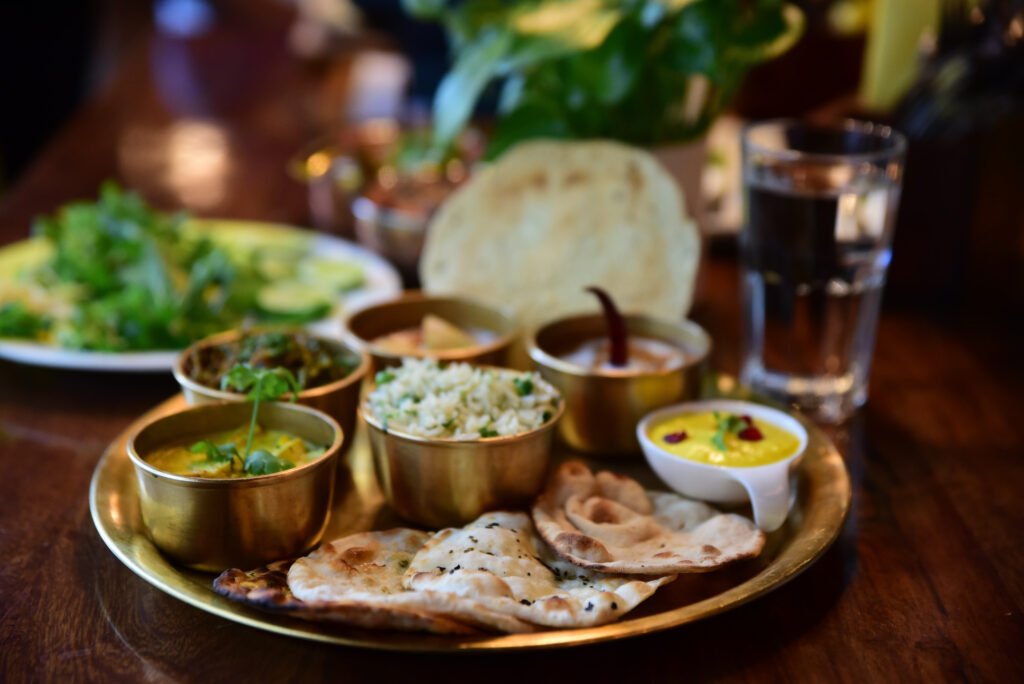
In South India, rice is the foundation of almost every meal — steamed, fermented into batter, or ground into flour for dishes like idli, dosa, and appam. In North India, wheat takes that role instead, showing up as roti, paratha, and naan. This single difference shapes entire meals: a South Indian thali is built around rice with multiple accompaniments, while a North Indian thali is built around bread paired with curries.
Coconut and Tamarind vs Dairy and Cream
South Indian cooking relies heavily on coconut — grated fresh, pressed into milk, or used in chutneys — along with tamarind for a distinct tangy, sour note that’s central to dishes like sambar and rasam. North Indian cooking, by contrast, leans on dairy: ghee, cream, and yogurt form the base of richer gravies like butter chicken and paneer curries from the main course menu. That’s really the biggest flavor divide — South Indian food tends to taste bright, tangy, and coconut-forward, while North Indian food tends to taste rich, creamy, and deeply spiced.
Fermentation Is a South Indian Signature
One of the most distinct features of South Indian cuisine is fermentation. Dosa and idli batter is made from rice and lentils left to ferment overnight, which gives these dishes their light texture and slightly tangy flavor, along with real digestive benefits from the natural probiotics that fermentation creates. North Indian cuisine doesn’t rely on fermentation nearly as much, favoring immediate preparation methods like tandoor grilling, slow-simmered curries, and fresh dough for bread.
Spice Profiles Are Genuinely Different
Both regions use a lot of spice, but the blends differ. South Indian cooking frequently uses mustard seeds, curry leaves, dried red chilies, and black pepper as a base tempering (tadka), giving dishes a sharper, more immediate heat. North Indian cooking builds around garam masala, cumin, coriander, and cardamom, creating a warmer, more layered, slow-building spice profile. At Rohan’s Indian Bistro, you can genuinely taste this difference by comparing a South Indian dish against a North Indian curry from the main course menu side by side. If layered heat is what you’re curious about, it’s worth reading what happens if you eat too much spicy food before you order the hottest thing on the list.
Cooking Methods Tell Their Own Story
North Indian cuisine is closely associated with tandoor cooking — the clay oven used for tandoori chicken, naan, and kebabs — a technique that developed heavily under Mughal influence. That same technique is exactly what makes tandoori chicken so tender when it’s done properly. South Indian cooking relies far more on steaming (idli), light stir-frying, and simmering thin, brothy dishes like sambar and rasam. Neither style is “better” — they reflect different climates, histories, and available ingredients across India’s regions.
Popular Dishes From Each Region
South Indian menus typically feature dosa, idli, vada, sambar, rasam, and coconut-based curries. North Indian menus feature butter chicken, dal makhani, paneer tikka, naan, and various biryani styles — though biryani itself has regional variations that borrow from both traditions, something worth understanding if you’re also comparing biryani vs fried rice on a takeout menu. At Rohan’s Indian Bistro, both traditions are represented — the South Indian section alongside North Indian mains, tandoor dishes, and biryani — so you don’t have to choose one cuisine over the other in a single visit.
Which One Should You Try First?
If you prefer lighter, tangier, rice-based meals, start with South Indian dishes like dosa or sambar. If you prefer rich, creamy, bread-paired curries, North Indian dishes like butter chicken or dal makhani are the better starting point. Honestly, the best approach is trying both — that’s exactly why a restaurant menu that covers both regions, rather than specializing in just one, gives you the full picture of what Indian food actually is. It’s also worth checking the vegetarian and vegan menus, since both regional styles have strong plant-based traditions that don’t get talked about enough.
Sweets and Desserts Follow the Same Divide
Even dessert reflects the North-South split. North Indian sweets lean heavily on dairy — think gulab jamun, kheer, or barfi, all built around milk, khoya, or condensed milk bases, often flavored with cardamom or saffron. South Indian sweets more often use ingredients like jaggery, coconut, and rice or lentil flour, seen in dishes like payasam or coconut-based ladoos, with a lighter, less dairy-heavy profile overall. It’s a small detail that mirrors everything else on this list — the North’s reliance on dairy and richness carries all the way through to the end of the meal, while the South’s use of coconut, jaggery, and grains stays consistent from the first course to the last.
Breads and Rice Habits That Reveal Regional Roots
You can often guess where a dish comes from just by looking at what sits next to it on the plate. A North Indian meal almost always includes some form of bread — naan, roti, or paratha — used as much as a utensil as a food, torn and used to scoop up curry. A South Indian meal, by contrast, is built around rice in various forms, with bread rarely making an appearance outside of a handful of regional exceptions. Even the rice itself differs — North Indian cooking tends to favor long-grain basmati, especially for biryani and pulao, prized for its fragrance and the way each grain stays separate after cooking. South Indian cooking often uses shorter-grain rice varieties for everyday meals, along with parboiled rice for dishes like idli and dosa, since the fermentation and steaming process works differently with those varieties. None of this is arbitrary — it traces back to what grew well in each region historically, which is part of why these habits have stayed remarkably consistent even as the two cuisines have started sharing more space on modern menus.
How Migration Blended the Two Styles Over Time
India’s regional cuisines haven’t stayed perfectly separated, especially in the last few decades. As people moved between states for work, education, and marriage, dishes traveled with them, and menus in most Indian restaurants today — including Rohan’s — reflect that blending rather than fighting it. It’s common now to see a restaurant serve a South Indian dosa alongside a North Indian butter chicken on the same menu, something that would have been unusual a few generations ago outside of major cities. This blending is part of why comparing South Indian food vs North Indian food isn’t really about picking a side — it’s about understanding two traditions that increasingly share the same table, especially in Indian restaurants across the U.S. where regional lines matter less than simply serving good food.
Climate Explains More Than You’d Expect
A lot of the North-South divide traces back to geography rather than culture alone. South India’s tropical climate suits rice paddies, coconut palms, and tamarind trees, which is exactly why those ingredients became the backbone of the region’s cooking. North India’s cooler, drier climate historically favored wheat cultivation and dairy farming, which shaped a cuisine built around bread and ghee instead. Even the reliance on fresh, quick-cooked dishes in the South versus slow-simmered, spice-heavy dishes in the North lines up with climate — lighter, faster meals suit hot, humid weather, while richer, warming dishes suit cooler regions. None of this is a coincidence; it’s centuries of cooking adapting to what the land could actually provide.
One Country, Two Very Different Culinary Identities
The South Indian food vs North Indian food comparison isn’t about one being more “authentically Indian” than the other — both are equally rooted in centuries of regional history, climate, and ingredient availability. The real value in understanding the difference is knowing what to order based on what you’re actually craving that day, whether it’s a tangy, rice-based South Indian meal or a rich, bread-paired North Indian curry at Rohan’s Indian Bistro.