



Menu
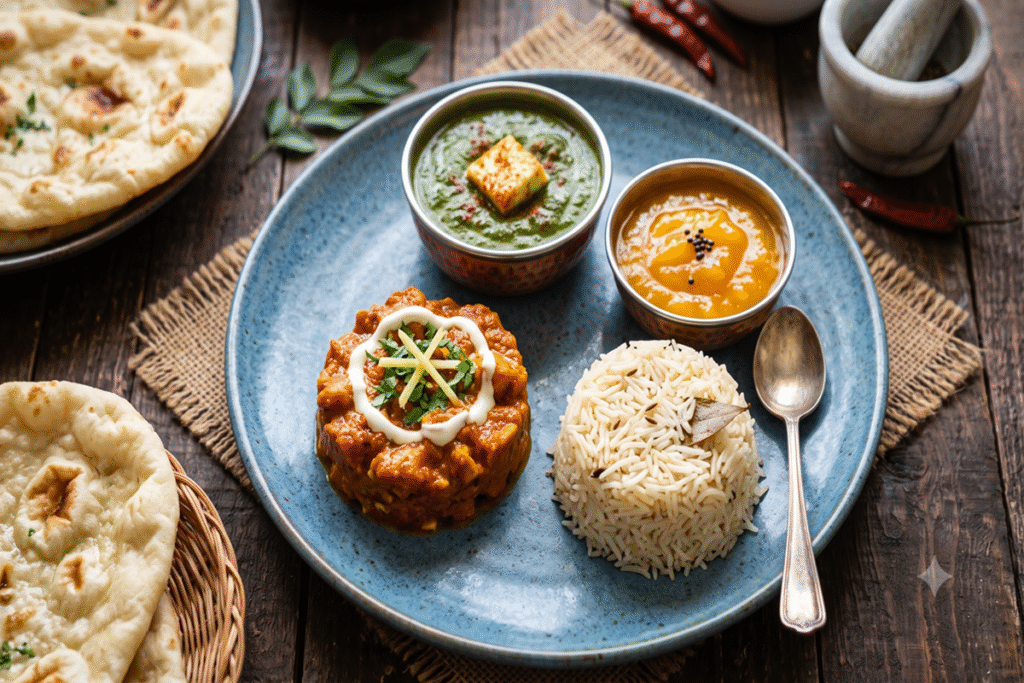
Indian Food Plating Techniques: How to Present Indian Dishes Like a Professional Chef
There is a moment when a plate of food stops looking like dinner and starts looking like something from a restaurant. Usually it has little to do with the recipe and everything to do with how it is arranged. Indian food, with its deep colours and rich gravies, can look stunning on a plate or it can look like a delicious mess, and the difference is technique. The good news is that plating is a skill you can learn, not a talent you are born with. Get a few principles right and your home cooking can carry the same visual pull that makes a chef’s plate hard to resist. Here is how the professionals do it.
Why Plating Matters More Than You Think
We eat with our eyes first, and that is not just a saying. A beautifully arranged plate raises expectations before the first bite, and those raised expectations actually make food taste better in tests. For Indian food this matters even more, because the flavours are bold and people often arrive with strong memories of how a dish should look. A neat, considered plate signals care and quality. A sloppy one, however good the cooking, quietly undersells it. Plating is the bridge between the effort in the kitchen and how the meal is received at the table, which is why restaurants take it so seriously.
Start With The Right Plate
Before any food goes down, the plate itself does a lot of the work, and choosing well is the easiest win there is:
- White or neutral plates let the colours of Indian food do the talking.
- A slightly oversized plate gives you room to arrange rather than crowd.
- Simple shapes read as elegant; busy patterns fight the food.
- Warm the plate for hot dishes so gravies do not congeal.
A great dish on the wrong plate loses half its appeal. The plate is the frame, and a calm frame makes the food the picture.
Build From A Base
One habit separates confident indian food plating from the hesitant kind: starting with a clear base and building up. Rather than scattering elements around, chefs anchor the plate with one component, often the rice, the bread, or a smear of sauce, and arrange everything else in relation to it. This gives the plate a centre of gravity and stops it looking random. A neat mound of pulao slightly off-centre, a folded paratha, or a swipe of chutney across the plate all give the eye somewhere to start. Once you have a base, every other decision becomes easier, because you are placing things with purpose instead of filling space.
Also Read: 5 Reasons Rohan’s Indian Bistro Is the Best Indian Restaurant in South Jersey
Play With Colour And Contrast
Indian food is a gift when it comes to colour, and using it deliberately makes a plate sing:
- Set a rich brown or red curry against a pale rice or raita for contrast.
- Add a fresh green, coriander, mint chutney, or a scatter of herbs, for life.
- Use a pop of red or pink, pomegranate or pickled onion, as a highlight.
- Avoid crowding the plate with too many browns that blur together.
The aim is contrast that guides the eye, not a rainbow for its own sake. A little restraint reads as more sophisticated than piling on every colour you have.
Garnishes That Earn Their Place
A garnish should mean something, not just sit there. The best ones add flavour, texture, or aroma as well as looks, which is why a fried curry leaf, a scatter of crisp fried onions, a few julienned strips of ginger, or a light dusting of crushed dried fenugreek all work so well on Indian plates. Skip the sad, out-of-place parsley sprig that has nothing to do with the dish. A garnish that belongs to the food looks intentional; one that does not looks like an afterthought. Kitchens like Rohan’s Indian Bistro finish plates with garnishes that echo what is already in the dish, so the last touch feels like part of the cooking rather than decoration bolted on.
Sauces, Drizzles, And Smears
How you handle the gravies and sauces is where a plate starts to look genuinely professional:
- Smear a thick chutney or sauce across the plate with the back of a spoon.
- Serve thin gravies in a small bowl or katori rather than flooding the plate.
- Drizzle a swirl of cream or yoghurt over a rich curry for contrast.
- Wipe the rim clean so no stray drips break the neat look.
These small moves turn a plate from home-style to restaurant-style in seconds. The clean rim in particular is the quiet signal that someone cared.
Also Read: If You Are Near Rowan University and Craving Indian Food — Rohan’s Indian Bistro Is the Answer
Use Height And Empty Space
Two ideas that beginners rarely use are height and negative space, and both are central to good indian food plating. Height gives a plate energy: a neat mound of rice, a stack of koftas, or a piece of tandoori propped at an angle looks far more alive than everything laid flat. Negative space, the deliberate empty area of the plate, gives the food room to breathe and stops it looking cramped. Resist the urge to fill every inch. A well-placed portion with clean space around it looks considered and generous at once, while a plate loaded edge to edge looks busy no matter how good the food is.
Plating The Classics
Some dishes have their own plating logic, and knowing it helps:
- Biryani: served in a mound, layered, with a fried onion and mint finish on top.
- Butter chicken or dal: in a shallow bowl, with a cream swirl and a herb scatter.
- Tandoori and kebabs: arranged on a slight angle with lemon, onion, and green chutney.
- Thali: small bowls placed in a considered order, not crammed together.
Rohan’s Indian Bistro plates each of these to its own strengths rather than forcing one style on everything. The dish tells you how it wants to be presented, if you let it.
Common Plating Mistakes To Avoid
A few habits quietly undo good food. Overfilling the plate is the biggest one, turning careful cooking into a heap. Messy rims and stray drips make everything look careless. Too many competing garnishes clutter the eye. Serving hot gravies on a cold plate lets them skin over before they reach the table. And matching a dark curry to a dark plate hides the very colours that make it appealing. Avoiding these is often more powerful than any clever trick, because clean and simple almost always beats busy. It is the discipline behind the plating, more than the flourishes, that kitchens like Rohan’s Indian Bistro rely on night after night.
The Finishing Touches That Matter
It is often the last few seconds before a plate leaves the kitchen that make the biggest difference. A light squeeze of lemon over a grilled dish, a final scatter of fresh herbs, a quick wipe of a stray drip, none of it takes long, yet together these touches lift a plate from good to polished. Warm the plate if the food is hot, chill it if the dish is cold, and taste with your eyes before it goes out. If something looks off, a small adjustment now is easy; once it is on the table it is too late. The habit of pausing for that final look is what separates a careful cook from a rushed one, and it costs nothing but a moment.
Practise On Everyday Meals
You do not need a special occasion to work on presentation. The fastest way to improve is to plate your ordinary weeknight food with a little more thought, a neater mound of rice here, a wiped rim there, until the habits become automatic. Treat each dinner as a chance to try one idea: build from a base tonight, play with height tomorrow, add a considered garnish the day after. Small, regular practice beats waiting for guests to impress. Before long you will find yourself arranging a plate well without thinking about it, which is exactly the point. Good presentation should feel like second nature, not a performance.
Conclusion
Good indian food plating is not about fancy equipment or art-school talent; it is about a handful of habits applied with a little care. Choose a calm plate, build from a base, use colour and height, garnish with intent, and leave room to breathe. Do that and the same dishes you already cook will start to look like they belong in a restaurant. The flavour was always there; plating simply lets the eye enjoy it first.
Want to see these techniques on a plate rather than a page? Visit Rohan’s Indian Bistro or explore the menu at rohansindianbistro.com.